
Hair transplant cost in Chicago typically ranges from $8,000 to $20,000 or more, depending on the number of grafts, the technique used, and your surgeon’s experience. That range reflects the total procedure cost, not just the surgeon’s fee. The biggest variable is graft count. A minor hairline refinement (800-1,500 grafts) will cost significantly less than full crown and frontal restoration (3,000+ grafts). At XSculpt, Dr. John D. Rachel performs Hair Micrograft, a minimally invasive technique that offers advantages over traditional FUE and FUT methods.
Key Takeaways
- Hair transplant cost in Chicago ranges from $8,000 to $20,000+ depending on graft count, technique, and surgeon expertise. Per-graft pricing typically falls between $4 and $10.
- The three main techniques are FUE (Follicular Unit Extraction), FUT (Follicular Unit Transplantation), and Hair Micrograft. Each differs in scarring, recovery time, graft survival rate, and total cost.
- Hair Micrograft at XSculpt is a minimally invasive approach performed by Dr. John D. Rachel, a quadruple board-certified facial surgeon. It combines precision extraction with reduced scarring and faster recovery compared to traditional strip methods.
- Hair transplants are cosmetic procedures and not covered by insurance. Financing options are available, and a complimentary consultation determines your graft needs and total cost.
Table of Contents
What Affects Hair Transplant Cost in Chicago
There is no flat rate for hair transplant surgery. Your total cost depends on several factors that your surgeon evaluates during consultation.
Graft Count
This is the single biggest cost driver. Each graft contains 1-4 hair follicles. The more grafts you need, the higher the total cost. A Norwood 2-3 (receding hairline) might require 1,000-1,500 grafts. A Norwood 5-6 (significant crown and frontal loss) can require 3,000-5,000+ grafts.
Technique
FUE, FUT, and Hair Micrograft each have different labor requirements, equipment needs, and time commitments. FUE and Hair Micrograft extract follicles individually, which takes more time per graft than FUT’s strip method. This precision comes at a higher per-graft cost but with less scarring and faster recovery.
Surgeon Experience and Specialization
A surgeon who performs hair restoration as a primary focus will produce more natural, consistent results than one who offers it as an occasional service. Board certifications in facial surgery matter here because hairline design requires an understanding of facial proportions and aesthetics.
Geographic Location
Chicago hair transplant pricing aligns with other major metro areas like Los Angeles and New York. Expect $4-$10 per graft at established practices. Significantly lower pricing should be evaluated carefully, as it may reflect less experienced providers or outdated techniques.
Session Complexity
Procedures that involve multiple donor areas, beard-to-scalp transfer, or scar repair from a previous transplant require additional time and expertise. These add to the total cost.
Hair Transplant Cost Breakdown by Graft Count
The following ranges represent typical all-inclusive pricing in Chicago for 2026. These include surgeon’s fee, facility, local anesthesia, and standard follow-up visits.
| Graft Count | Typical Use Case | Chicago Cost Range |
|---|---|---|
| 800 – 1,500 grafts | Hairline refinement, temples | $5,000 – $12,000 |
| 1,500 – 2,500 grafts | Frontal restoration, moderate thinning | $8,000 – $16,000 |
| 2,500 – 3,500 grafts | Full frontal + crown coverage | $12,000 – $20,000 |
| 3,500 – 5,000+ grafts | Extensive restoration, multiple zones | $18,000 – $30,000+ |
Your actual graft count is determined during consultation. Surgeons assess your donor hair density, the area of loss, your desired density, and your long-term hair loss pattern before providing a quote.
What’s Included in Your Hair Transplant Quote
Not all quotes are structured the same way. When comparing pricing between practices, make sure you understand what is and is not included.
A comprehensive hair transplant quote should cover:
- Surgeon’s fee for the procedure itself
- Facility fee for the surgical suite
- Local anesthesia (hair transplants are performed under local, not general anesthesia)
- Pre-operative evaluation and hair loss assessment
- Post-operative care supplies (medications, aftercare products)
- Follow-up appointments (typically 1-3 visits in the first year)
Some practices charge per graft, while others offer all-inclusive flat-rate pricing. Per-graft pricing is transparent, but make sure it includes anesthesia and facility fees. A quote that seems low may exclude these line items.
At XSculpt, consultations are complimentary. You receive a detailed cost breakdown before making any decisions. Schedule your consultation to get a personalized quote.
FUE vs. FUT vs. Hair Micrograft: Technique Comparison
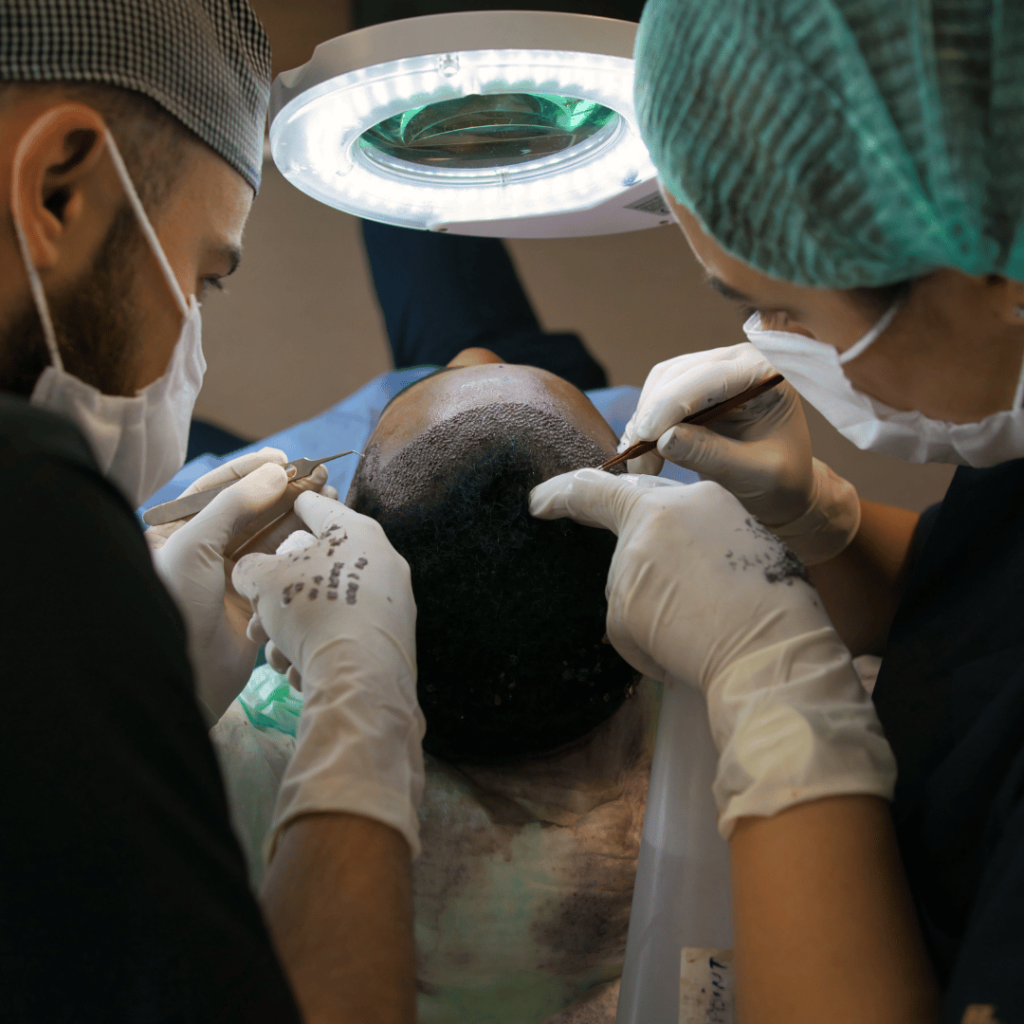
The technique your surgeon uses affects cost, recovery, scarring, and results. Here is how the three main approaches compare.
FUE (Follicular Unit Extraction)
FUE uses a small circular punch tool (0.6-1.0mm) to extract individual follicular units from the donor area, usually the back and sides of the head. No strip of skin is removed. The grafts are then implanted into recipient sites.
Advantages: No linear scar, faster healing, allows short hairstyles, can harvest from beard or body if needed.
Limitations: More time-intensive per session (6-10 hours for larger cases), per-graft cost is higher than FUT, may require multiple sessions for extensive restoration.
Cost: $6-$10 per graft in Chicago.
FUT (Follicular Unit Transplantation)
FUT removes a narrow strip of scalp from the donor area. The strip is dissected under a microscope into individual follicular units, which are then transplanted into the thinning areas.
Advantages: Higher graft yield per session (3,000-4,000+ grafts possible), slightly higher graft survival rate (95-98%), lower cost per graft.
Limitations: Leaves a linear scar at the donor site, longer recovery period, requires sutures, limits very short hairstyles.
Cost: $3-$7 per graft in Chicago.
Hair Micrograft at XSculpt
Hair Micrograft is XSculpt’s proprietary hair restoration technique performed by Dr. John D. Rachel. It uses a minimally invasive approach to extract and transplant individual follicular units with precision. The technique emphasizes minimal handling of grafts, which supports higher survival rates, and uses refined extraction methods that reduce trauma to the donor area.
Advantages: Minimally invasive, no linear scar, reduced trauma to donor and recipient sites, natural-looking results, shorter recovery compared to FUT.
Limitations: Graft count per session depends on individual donor density and treatment plan.
Cost: Determined during consultation based on your specific graft needs and treatment plan. Contact XSculpt for personalized pricing.
| Factor | FUE | FUT | Hair Micrograft (XSculpt) |
|---|---|---|---|
| Extraction Method | Individual follicle punch | Strip of scalp tissue | Minimally invasive individual extraction |
| Scarring | Tiny dot scars (minimal) | Linear scar at donor site | Minimal to no visible scarring |
| Recovery Time | 5-7 days | 10-14 days | Shorter recovery, reduced downtime |
| Graft Survival Rate | 90-95% | 95-98% | High (minimal graft handling) |
| Procedure Time | 6-10 hours | 4-8 hours | Varies by graft count |
| Short Hairstyles OK? | Yes | No (linear scar visible) | Yes |
| Cost Per Graft (Chicago) | $6-$10 | $3-$7 | Consultation-based pricing |
| Best For | Short hairstyles, smaller sessions | High graft count, budget-conscious | Men seeking precision with minimal scarring |
For a deeper explanation of these techniques, read our guide to FUE and FUT hair transplants.
What Drives the Cost Up (and Why It’s Often Worth It)
Not all hair transplants are equal. Several factors create cost differences between providers, and in most cases, the higher price reflects meaningful quality differences.
Surgeon Specialization
A surgeon who specializes in hair restoration and facial surgery understands hairline design at a level that a general cosmetic surgeon may not. Your hairline is one of the most visible features on your body. The angle, direction, density, and placement of each graft directly affects how natural your results look. This expertise comes at a premium, and it is worth it.
Graft Handling and Survival
How grafts are handled between extraction and implantation matters significantly. Techniques that minimize time outside the body and reduce physical manipulation of follicles produce higher survival rates. Some clinics use preservation solutions. Others rely on speed and volume. Ask about graft survival rates during your consultation.
Facility and Safety Standards
Hair transplants are performed under local anesthesia in a surgical suite. The quality of that facility, including sterile protocols, patient monitoring equipment, and staffing, varies between practices. An accredited facility adds cost but provides measurable safety benefits.
Follow-Up and Long-Term Planning
Hair loss is progressive. A qualified surgeon plans not just for today’s transplant but for how your hair will look in 5, 10, and 20 years. This long-term perspective affects graft placement strategy, donor conservation, and whether additional sessions may be needed. Surgeons who offer this planning as part of the package provide greater value.
Dr. John D. Rachel: Hair Restoration at XSculpt
Dr. John D. Rachel, MD, FACS, is a quadruple board-certified facial surgeon who performs all hair restoration procedures at XSculpt. His four board certifications include the American Board of Facial Plastic and Reconstructive Surgery, the American Board of Otolaryngology (Head and Neck Surgery), the American Board of Cosmetic Surgery, and the American Board of Facial Cosmetic Surgery.
Dr. Rachel graduated Phi Beta Kappa from Michigan State University and earned his medical degree with Alpha Omega Alpha honors from Wayne State University School of Medicine. He completed a fellowship through the American Academy of Facial Plastic and Reconstructive Surgery and has published research in peer-reviewed medical journals including The Archives of Otolaryngology and Dermatologic Surgery.
His background in facial plastic surgery provides a distinct advantage for hair restoration. Hairline design is fundamentally a facial aesthetic decision. The shape, height, density gradient, and age-appropriateness of a hairline require the same eye for proportion and balance that guides rhinoplasty and facelift procedures. Dr. Rachel brings this trained perspective to every Hair Micrograft case.
Dr. Rachel sees patients at XSculpt’s Chicago (467 W Erie Street) and Glenview (2350 Ravine Way, Suite 400) locations. View his work on Instagram @facesculptmd and @metropolitan_md.
What to Expect: The Hair Transplant Process
Consultation
Your first visit includes a thorough evaluation of your hair loss pattern, donor area density, scalp condition, and overall health. Dr. Rachel discusses your goals, recommends a technique, estimates graft count, and provides a detailed cost breakdown. This consultation is complimentary at XSculpt.
Pre-Procedure Preparation
You will receive specific instructions on medications to avoid (blood thinners, certain supplements), alcohol and tobacco restrictions, and how to prepare your scalp. Most patients do not need any lab work beyond the initial evaluation.
Procedure Day
Hair Micrograft is performed under local anesthesia. You are awake and comfortable throughout. The procedure length depends on your graft count. Dr. Rachel personally performs the extraction and placement. Most patients describe mild pressure or vibration during extraction with no significant pain.
Immediate Recovery (Days 1-7)
Expect mild swelling, redness, and sensitivity in both donor and recipient areas for the first 3-5 days. Small scabs form around each transplanted graft and fall off naturally within 7-10 days. Most men return to desk work within 2-3 days. Avoid strenuous exercise and direct sun exposure for at least 2 weeks.
Growth Timeline
Transplanted hairs typically shed within 2-4 weeks. This is normal and expected. It is called shock loss, and it means the follicles are entering a new growth cycle. New growth begins at 3-4 months. Noticeable density improvement shows at 6-8 months. Full results are visible at 12-18 months.
Financing and Payment Options
Hair transplants are classified as cosmetic procedures. Health insurance does not cover them except in rare cases of hair loss due to burns, trauma, or certain medical conditions.
XSculpt offers financing options to make the procedure accessible. Monthly payment plans allow you to spread the cost over time. Depending on the total amount and financing terms, monthly payments may start as low as $150-$300 per month.
Your consultation includes a detailed cost estimate so you can explore financing before committing. Visit the XSculpt pricing page for general price ranges across all procedures.
Red Flags in Hair Transplant Pricing
When researching providers, watch for these warning signs:
Quotes that exclude key costs. If a per-graft quote does not clearly include anesthesia, facility fees, and follow-up visits, the final number will be higher than expected. Always ask for an all-inclusive breakdown.
Prices significantly below market average. A Chicago hair transplant at $2-$3 per graft likely means a less experienced surgeon, technician-performed extraction, or outdated technique. Your donor hair is a limited resource. A poor first transplant limits what can be achieved in future procedures.
No before-and-after gallery. A surgeon who specializes in hair restoration should have an extensive gallery of real patient results. Ask to see cases similar to your hair loss pattern and graft count.
Surgeon does not personally perform extraction. In some clinics, technicians extract and place grafts while the surgeon oversees. Ask who performs each step of the procedure. At XSculpt, Dr. Rachel is directly involved in the extraction and transplantation process.
No long-term plan. A surgeon who only addresses your current hair loss without discussing future progression, donor conservation, and potential follow-up procedures is not providing complete care.
Frequently Asked Questions
How much does a hair transplant cost in Chicago?
Hair transplant cost in Chicago ranges from $8,000 to $20,000+ for most patients. The total depends on your graft count, the technique used (FUE, FUT, or Hair Micrograft), and your surgeon’s experience. Per-graft pricing in Chicago typically falls between $4 and $10. A complimentary consultation at XSculpt provides a personalized quote.
Does insurance cover hair transplant surgery?
Hair transplants are considered cosmetic and are not covered by health insurance in most cases. Rare exceptions include hair loss caused by burns, trauma, or documented medical conditions. Financing options are available to help manage the cost.
What is Hair Micrograft and how is it different from FUE?
Hair Micrograft is XSculpt’s minimally invasive hair restoration technique performed by Dr. John D. Rachel. Like FUE, it extracts individual follicular units without removing a strip of scalp. Hair Micrograft emphasizes minimal graft handling and precision placement for natural-looking results with reduced trauma to donor and recipient areas. Learn more about the differences between hair transplant techniques.
How many grafts will I need?
Graft count depends on the extent of your hair loss, your desired density, donor hair quality, and your hairline goals. Minor hairline refinement may require 800-1,500 grafts. Full frontal and crown restoration can require 3,000-5,000+ grafts. Your surgeon determines the exact number during an in-person evaluation.
Is a hair transplant permanent?
Transplanted hair follicles are taken from areas genetically resistant to the hormone (DHT) that causes pattern baldness. These follicles maintain that resistance in their new location, making the results permanent. However, native hair in non-transplanted areas may continue to thin over time, which is why long-term planning and potential follow-up sessions are important.
How painful is a hair transplant?
Hair transplants are performed under local anesthesia. Most patients report mild discomfort during the initial numbing injections and little to no pain during the procedure itself. Post-procedure soreness is typicall
When can I go back to the gym after a hair transplant?
Light activity (walking) can resume within a few days. Avoid heavy lifting, intense cardio, and exercises that cause significant sweating for at least 2 weeks. Your surgeon provides specific return-to-exercise guidelines based on your procedure and healing progress.
Why do hair transplant prices vary so much between clinics?
Price variation reflects differences in surgeon specialization, technique, facility quality, graft handling protocols, and what’s included in the quote. Lower prices may indicate technician-performed procedures, less experienced surgeons, or quotes that exclude anesthesia and facility fees. Compare all-inclusive pricing and review before-and-after galleries to evaluate value.
Ready to find out what your hair transplant will cost? Schedule a complimentary consultation with Dr. John D. Rachel at XSculpt. In-person consultations available at our Chicago (467 W Erie Street) and Glenview (2350 Ravine Way, Suite 400) locations. Virtual consultations also available. Call or text (312) 846-1529.
Related Content
- FUE and FUT Hair Transplants
- Male Plastic Surgery Prices
- Financing Plastic Surgery in Chicago
- Patient Before and After Gallery
- XSculpt Patient Reviews
- About XSculpt
Medical Disclaimer: The content on this page has been medically reviewed for accuracy by Dr. John D. Rachel, MD, FACS, quadruple board-certified facial surgeon specializing in hair restoration. This information is for educational purposes only and is not a diagnosis or treatment plan. Individual results vary. Candidacy, risks, and expected outcomes can only be determined after a private consultation and examination with a qualified provider. XSculpt is a division of Chicago Breast & Body Aesthetics.

