If your chest looks puffy even when you’re lean, the issue may be gynecomastia (true gland tissue), not “stubborn fat.” Diet and training can reduce fat, but they do not remove gland.
At our gynecomastia clinic XSculpt in River North, Chicago, our surgeons focus on men-only body contouring every day. Dr. Marc Adajar treats gynecomastia with our ChestSculpt® approach to build a flatter, more natural male chest shape.
This guide breaks down gland vs fat vs skin, how diagnosis typically works, what surgery treats, and what recovery often looks like for active men.
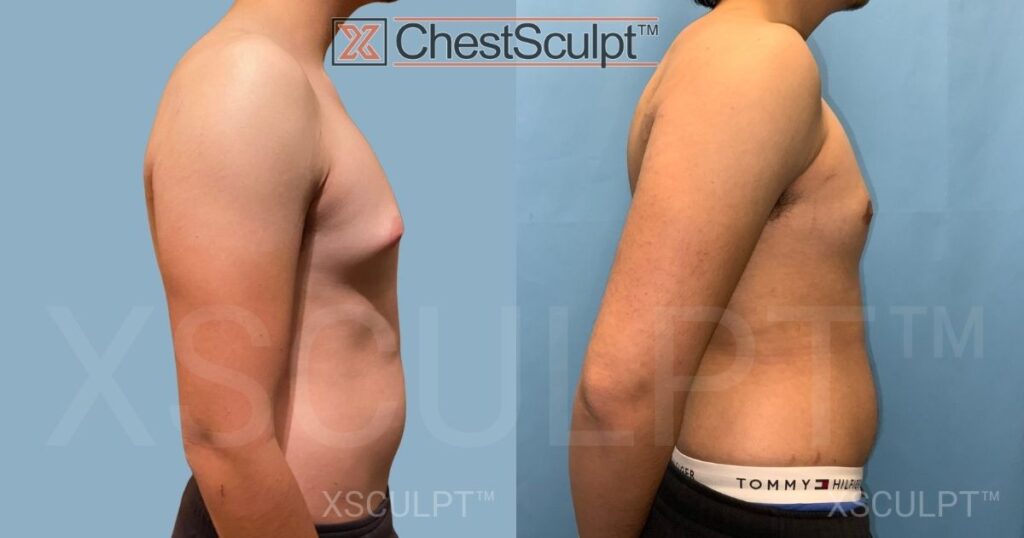
What is gynecomastia?
Gynecomastia is a benign increase in male breast gland tissue, often linked to changes in testosterone and estrogen balance. It can affect one or both sides. Early or rapidly changing cases may feel tender.
In our Chicago practice, we commonly see gynecomastia in men after puberty, lifters, new dads, and men who notice changes with age, medications, or health shifts.
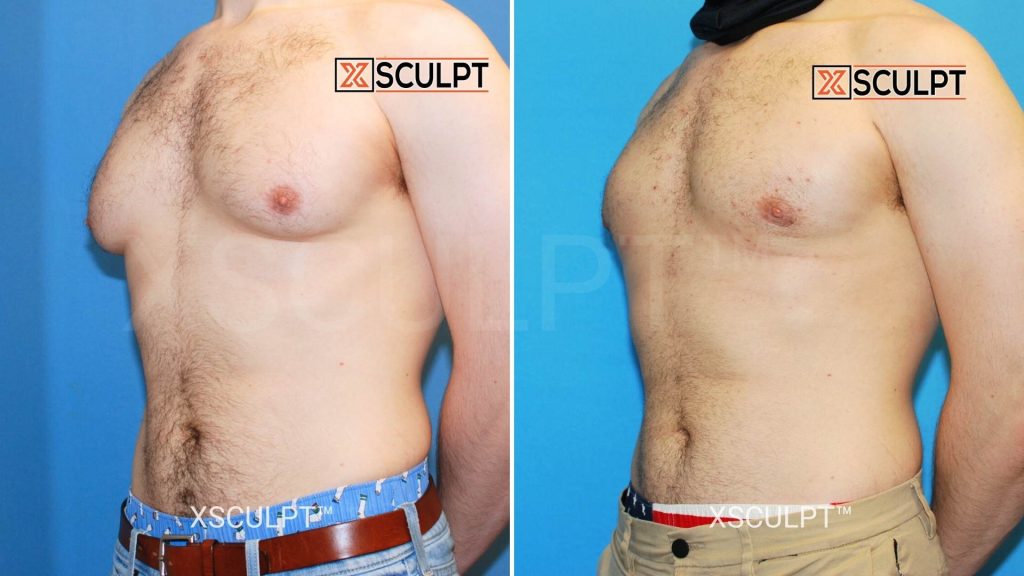
Gynecomastia vs fat in the chest
True gynecomastia typically feels like a firm, rubbery disk under the nipple-areola complex. Pseudogynecomastia is fat without gland growth.
Fat loss reduces the size of fat cells. It does not remove gland tissue. That disconnect explains why your torso can lean out while the areola still projects.
Why your chest can look puffy at low body fat
A retained gland can keep the nipple-areola complex projecting even at single-digit body fat. You may notice a rounded lower chest, a stubborn “puffy nipple” look, or a shape that does not match your training.
In lifters, the contrast can look sharper because the upper chest and shoulders develop while the areola stays prominent.

Common causes we review in your consult
Gynecomastia can have several contributing factors. We review what applies to you and what does not.
Common categories include:
- Normal life stages (puberty and aging)
- Certain medications
- Some supplements or performance-enhancing drugs
- Health conditions that affect hormones or metabolism
When appropriate, we may recommend labs or imaging to rule out red flags. Most cases still come down to a careful exam and an individualized plan.
How is gynecomastia diagnosed
Diagnosis is often clinical. A firm, concentric gland beneath the areola points toward true gynecomastia. If there is rapid growth, significant asymmetry, nipple discharge, or other concerning changes, selective testing may help guide next steps.
At XSculpt, your consult focuses on what is driving projection in your case and how to treat the actual tissue involved.
In this video, Dr. Marc Adajar discusses what gynecomastia is, how it happens, how it is diagnosed, and the next steps in treatment.
How is gynecomastia treated?
For persistent gynecomastia, surgery is often the most durable correction because it removes gland tissue rather than shrinking fat cells.
Our ChestSculpt® approach typically combines:
- Precise gland excision to reduce areola projection and remove dense tissue
- VASER hi-definition liposuction to contour the surrounding chest for smoother borders and a natural taper
Technique matters. Our goal is a masculine contour that blends, rather than a flat spot with an obvious edge. Outcomes vary by patient anatomy, skin quality, and gynecomastia grade.
Recovery and return to training
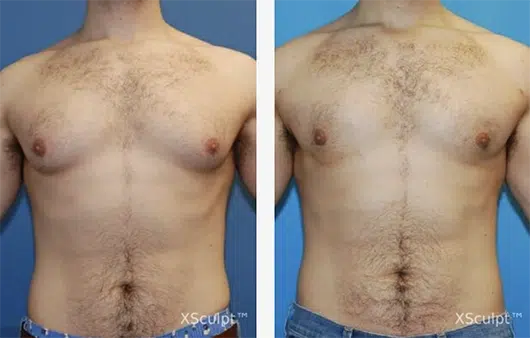
Most men want a clear plan that protects results and gets them back to routine safely. Recovery varies, but these are common guidelines:
- Work: Many men return to desk work within a few days, depending on job demands
- Swelling and compression: Swelling is expected early on. A compression vest and massages helps support healing and minimize scarring.
- Training: Most men ramp back in phases, with surgeon clearance. Shape often continues refining over weeks to months as swelling settles.
You will get specific instructions for walking, compression, massage when appropriate, and a smart progression back to chest and back training. For training guidance that applies before and after treatment, review gynecomastia and exercise for a clear breakdown of what exercise can change and what it cannot.
Why men choose XSculpt in Chicago
- Focused expertise: Men-only chest contouring and hi-definition lipo are core to our practice.
- Direct surgeon access: You’ll be in touch with Dr. Marc Adajar before and after your gynecomastia procedure.
- Full gland removal + written warranty: Designed to address the “came back” worry.
- Transparent pricing and financing: CareCredit and Cherry available.
- Discreet process: Virtual consults and virtual or in-person follow-ups in River North, Chicago.

GET YOUR COMPLIMENTARY ANALYSIS AND CONSULTATION TODAY
XSCULPT was founded by two award-winning board-certified surgeons Dr. Marc Adajar & Dr. Anh-Tuan Truong. Our practice specializes in body contouring procedures, including Gynecomastia (Male Breast Reduction), Abdominal Etching, Lipo 360, Vaser Hi Definition Liposuction, Male Puffy Nipple Reduction, Male Tummy Tuck, and Non-Surgical Fat Reduction. Medical services include Hormone & Testosterone Replacement Therapy, Anti-Aging, Peptide Therapy and Medical Weight Loss.